Japan's Places of Scenic Beauty, Explained
What "Places of Scenic Beauty" and "Special Places of Scenic Beauty" actually mean in Japanese law, and which famous sites hold the top tier.
Last updated 2026-08-26
A Legal Designation, Not Just a Pretty View
When a Japanese garden, gorge, or coastal view gets called a "Place of Scenic Beauty" (名勝, Meishō), that is not a travel writer's compliment, it is a formal legal status. The designation is made under Japan's Act on Protection of Cultural Properties and administered by the Agency for Cultural Affairs, commonly known as Bunkacho. The same law also creates categories for Historic Sites and Natural Monuments, and Places of Scenic Beauty sit alongside those as one of the three main types of "Monuments" the law recognizes.
Being designated changes what can legally happen to a site. Altering the landscape, cutting down trees, building structures, or otherwise disturbing a designated Place of Scenic Beauty generally requires permission from the relevant cultural affairs authority, not just a landowner's say-so. That is a meaningfully different thing from a site simply being popular or photogenic, and it is worth keeping in mind as you read lists online that casually mix "scenic and lovely" with "legally protected," since the two overlap a lot but are not identical.
Two Tiers: Regular and Special
Within this system there is a second, higher tier called Special Places of Scenic Beauty (特別名勝, Tokubetsu Meishō), reserved for sites judged to be of especially outstanding value. Think of it as roughly analogous to how some World Heritage sites get extra attention within an already exclusive list, except this is a purely domestic Japanese legal distinction with its own criteria and its own paperwork.
The exact numbers shift over time as new sites are added, so they are worth treating as approximate rather than fixed. As of recent counts, there were roughly 36 sites nationwide holding the Special tier, out of a total of somewhere around 400 or so Places of Scenic Beauty overall (a figure that includes those 36 special ones). Because designations do get added periodically, and because count figures found online do not always agree with each other, treat any specific number you see, including the ones here, as a reasonable approximation rather than gospel, and this is one of the reasons this article is flagged for verification.
Famous Special Places of Scenic Beauty Worth Visiting
The roster of Special Places of Scenic Beauty reads like a highlight reel of Japan's most photographed landscapes and gardens. Matsushima Bay near Sendai, with its pine-covered islets scattered across the water, holds the designation, and so does Amanohashidate, the pine-covered sandbar in Kyoto Prefecture that appears to float between two arms of the sea when viewed from its famous overlooks. Itsukushima, the shrine island better known as Miyajima near Hiroshima, is on the list as well. What makes this trio especially fun for travel planning is that all three are also separately known as the "Three Views of Japan" (Nihon Sankei), an older and more informal ranking of Japan's most celebrated scenery, so in these three cases the folk reputation and the formal legal designation happen to line up.
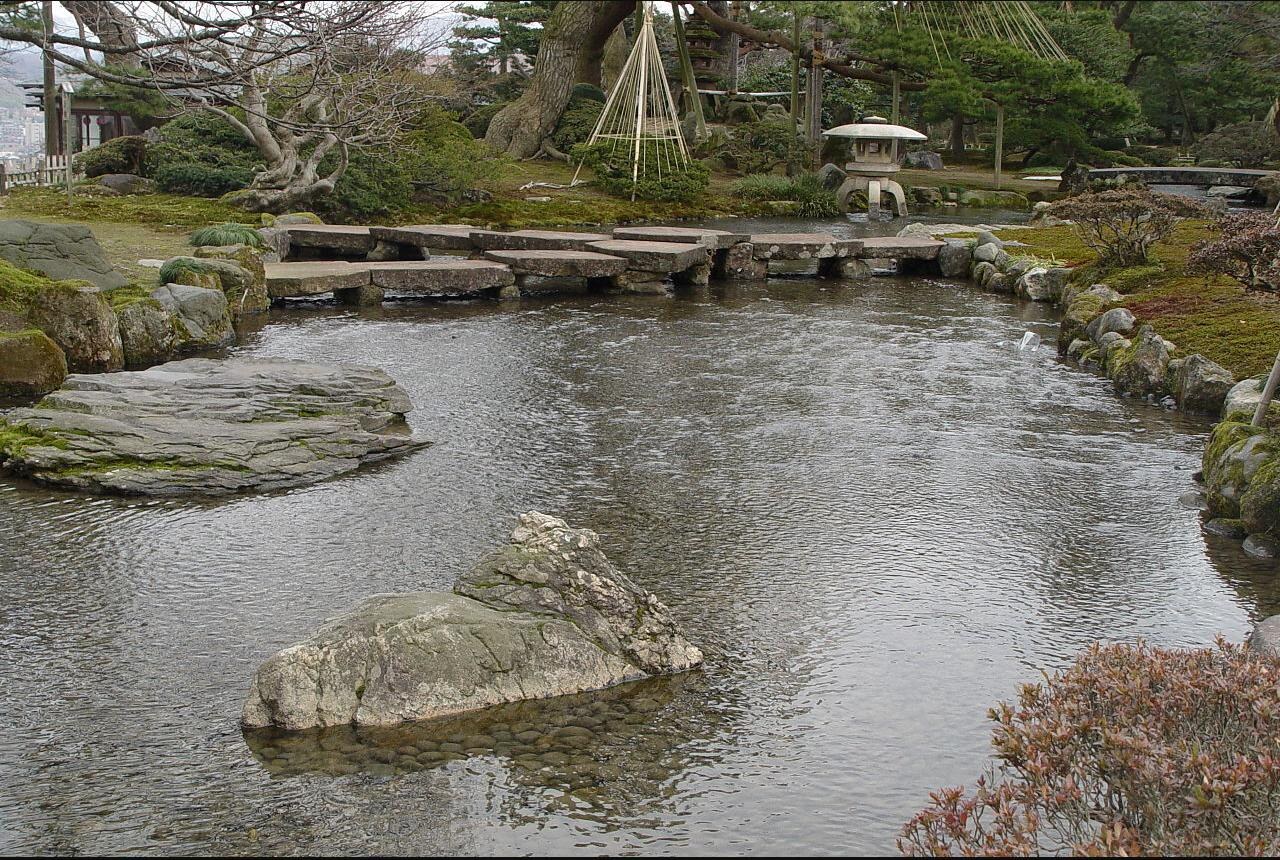
Kyoto's temple gardens contribute a disproportionate share of entries, including the garden at Kinkaku-ji (formally Rokuon-ji), the garden at Ginkaku-ji (formally Jisho-ji), the rock garden at Ryoan-ji, the Hojo garden at Daitoku-ji, and the Ninomaru Palace garden at Nijo Castle, among others clustered in and around the old capital. Kanazawa's Kenrokuen, widely considered one of the finest strolling gardens in the country, is likewise designated, and it carries a similar kind of double honor to the Three Views trio: Kenrokuen is also counted among the informal "Three Great Gardens of Japan" (Nihon Sanmeien), alongside Okayama's Korakuen, which is itself a Special Place of Scenic Beauty, and Mito's Kairakuen, which reporting suggests holds only the regular Meishō designation rather than the Special tier. That is a genuinely interesting wrinkle: three gardens celebrated together in popular culture as Japan's best do not all sit at the same rung of the legal ladder, which is exactly the kind of nuance that gets flattened when lists get copied from site to site without checking.
The list extends well beyond gardens and beaches into dramatic natural terrain, including the alpine valley of Kamikochi in Nagano, the Kurobe Gorge in Toyama, Lake Towada straddling Aomori and Akita, and reportedly Mount Fuji itself, whose slopes carry scenic-beauty protection in addition to its more widely known World Heritage status. Tokyo contributes its own entries too, with strolling gardens such as Rikugien and Hamarikyu Gardens appearing on the Special list, a reminder that this is not purely a rural or Kyoto-centric category.
What the Designation Actually Protects
Because the underlying law treats Places of Scenic Beauty as cultural property rather than simply as land, the protections are aimed at preserving the character that earned the designation in the first place, whether that is the layout of a strolling garden, the shape of a coastline, or the composition of a gorge. Local and national authorities are typically involved in reviewing proposed changes, and maintenance work at these sites, from pruning historic pines to repairing garden paths, is often carried out with an eye toward keeping the site consistent with its designated form rather than modernizing it freely.
For visitors, this legal backing is part of why so many of these places feel remarkably well kept decades or centuries after they were first laid out. It is also why development pressure near a designated site can become a genuine point of local controversy, since altering the surroundings of a legally protected scenic area is a bureaucratic matter, not just an aesthetic one.
A Word of Caution: Fame and Formal Status Do Not Always Match
It is easy to assume that any site described online as one of Japan's great scenic or historic landmarks must carry the Special designation, but that is not always the case. Nikko's shrine and temple precinct, home to the elaborately decorated Tosho-gu shrine, is protected as a Historic Site under the same cultural properties law, but available records point to that precinct being designated at the regular Historic Site level rather than as a Special Historic Site or a Special Place of Scenic Beauty, despite Nikko's immense popularity and its separate UNESCO World Heritage status. That does not make Nikko any less worth visiting, but it is a good reminder that "famous," "beautiful," and "holds the top legal tier" are three different claims, and travel content that blurs them together is exactly the kind of thing worth double-checking, ideally against the Agency for Cultural Affairs' own records, before repeating as fact.
Related reading
Want a full itinerary, not just one article?
The Trip Planner builds a day-by-day plan around the regions and interests you pick.
Open Trip Planner