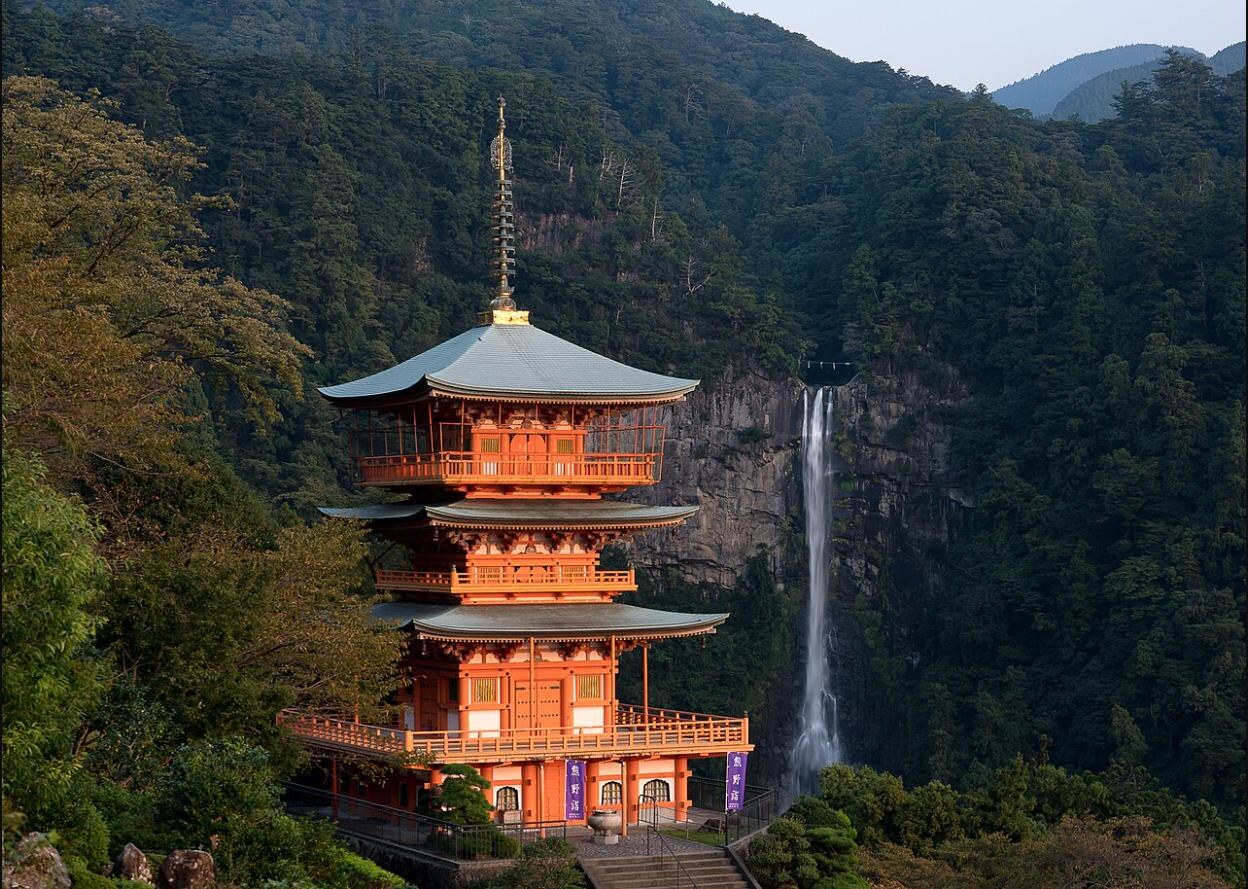
Photo: Big Ben in Japan / CC BY-SA 2.0
Wakayama: Sleeping on Koyasan and the Kumano Kodo
Wakayama offers a real overnight temple stay on sacred Mount Koya and ancient pilgrimage trails through the mountains, plus a classic beach onsen town.
Last updated 2026-08-22
Koyasan: a mountaintop monastery town
Koyasan was founded in the 9th century by the monk Kukai (Kobo Daishi) as the center of Shingon Buddhism, and it's still a functioning monastic town, not a museum piece. Dozens of temples offer shukubo — overnight stays with vegetarian Buddhist cuisine (shojin ryori) and the option to join morning prayers. Okunoin, a cemetery of over 200,000 gravestones under old-growth cedar, is genuinely atmospheric, especially walked at dusk or on a guided night tour.
Getting up requires a train plus a short cable car (funicular); it gets cold and can see snow in winter, so pack accordingly and check seasonal access before a winter visit.
Kumano Kodo pilgrimage trails
The Kumano Kodo is a network of ancient pilgrimage routes through the Kii mountains connecting Koyasan-area sites to the Kumano Sanzan (three grand shrines) further south. Sections range from short paved walks to multi-day mountain hikes with rural lodging — it's a real hiking commitment, not a stroll, and English infrastructure is thinner than on the more famous trails, so plan routes and accommodation in advance.
Shirahama, for contrast
On the coast, Shirahama has a genuinely nice white-sand beach and is considered one of Japan's three oldest hot spring resorts. It's a good way to end a mountain-and-temple-heavy trip with something more relaxed, though it's a longer trip from Osaka than Koyasan is.
Related reading
Want a full itinerary, not just one article?
The Trip Planner builds a day-by-day plan around the regions and interests you pick.
Open Trip Planner