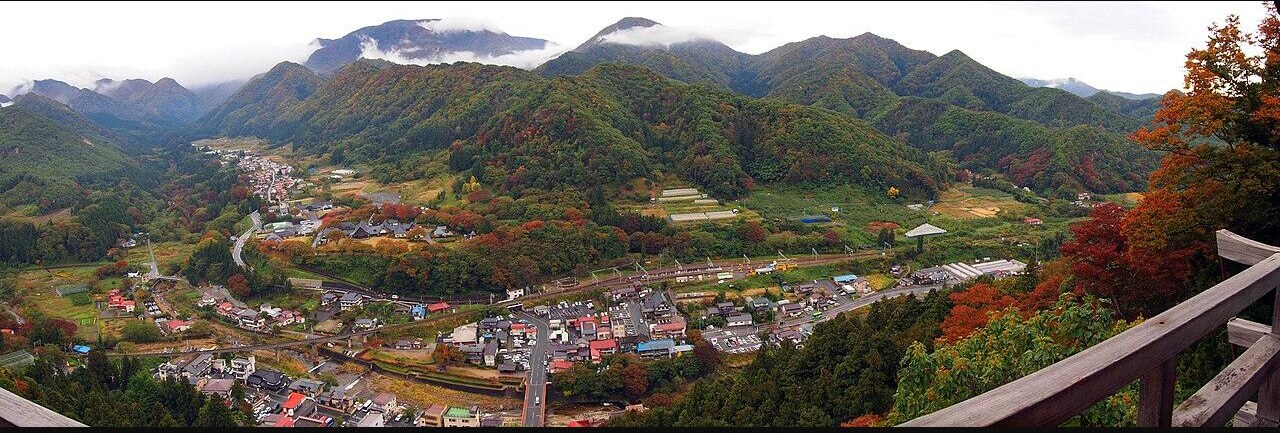
Photo: ぱちょぴ / CC BY-SA 3.0
Autumn Leaves (Koyo) Season in Japan by Region
Autumn colors sweep from Hokkaido to Kyushu over roughly ten weeks. When peak koyo happens in each region, and why elevation matters as much as latitude.
Last updated 2026-08-25
The short version
Autumn leaves (koyo) move in the opposite direction from cherry blossoms — the color front starts in Hokkaido and high mountain ranges in late September, then sweeps south and downhill, finishing in Kyushu and sheltered lowland valleys in early-to-mid December. It's a much longer wave than sakura season: roughly ten weeks nationwide versus about six for cherry blossoms.
The extra length comes from a second axis that barely matters for sakura: elevation. A mountain range can peak weeks before the city at its base, even in the same prefecture — Hakone or Nikko can be past peak while Tokyo's own parks are still green. Two tree types drive most of what you see: maples (momiji), which turn a deep red, and ginkgo (icho), which turns bright yellow slightly later in the same location.
Hokkaido & the high mountains (late September–mid October)
Color starts earliest at altitude. Daisetsuzan, Hokkaido's highest mountain range, can begin changing in early-to-mid September — one of the first places in the country to turn. Lower-elevation Hokkaido, including Sapporo itself, typically peaks later, toward the end of October.
Tohoku & the Japan Alps (early-to-mid October)
Northern Honshu's mountain scenery — Lake Towada and Oirase Gorge in Aomori, Kamikochi and the wider Japan Alps in Nagano — typically peaks in the first half of October. Lower-elevation Tohoku cities generally lag a couple of weeks behind their own surrounding mountains, so a single prefecture can have two very different koyo windows depending on where you go within it.
Tokyo, Kanto & central lowlands (late October–mid November, longer than it looks)
This is where the elevation gap is most likely to catch visitors out. Hakone and Nikko, both easy day trips from Tokyo, typically peak in early-to-mid November — while central Tokyo's own parks and gardens (Shinjuku Gyoen, the Meiji Jingu Gaien ginkgo avenue) usually don't peak until late November into early December. Treat "Tokyo in autumn" as two separate windows rather than one, depending on whether you're headed to the mountains or staying in the city.
Kansai & Kyoto (mid-November–early December, the famous peak)
Kyoto's temple gardens — Arashiyama, Tofuku-ji, Kiyomizu-dera — are Japan's best-known koyo destination, and the reputation is earned. Peak color typically runs from mid-to-late November into the first few days of December, depending on the specific garden and how sheltered it is. It's also the single most crowded and booked-up koyo window in the country, on par with cherry blossom season in Kansai for how far ahead lodging fills up.
Kyushu & the south (late November–mid December, latest of all)
Kyushu closes out the season, typically peaking from late November into mid-December, occasionally later in sheltered valleys. If your trip lands in early-to-mid December and you still want to catch color, Kyushu is usually the last realistic option.
How this differs from planning around sakura
The main practical difference is slack: with a ten-week national window instead of six, koyo season gives you more room to be wrong about the exact peak and still see good color somewhere. The trade-off is that elevation matters more than it does for cherry blossoms, so "which region" is only half the question — you also need to decide whether you're chasing mountain color or lowland/city color, since those can be three to four weeks apart in the same area.
As with sakura, treat these windows as a starting point rather than a fixed date — peak timing shifts from year to year with autumn temperatures, and forecasts firm up through September and October rather than being reliable months in advance. Our Trip Planner can help turn a target region and window into an actual day-by-day plan.
Related reading
Want a full itinerary, not just one article?
The Trip Planner builds a day-by-day plan around the regions and interests you pick.
Open Trip Planner