Visiting Japan in Winter: A Region-by-Region Guide
Winter in Japan ranges from serious snow to shorts-weather in the same week, depending on region and coast. What to expect and pack, region by region.
Last updated 2026-08-25
The short version
December through February is Japan's quietest and often cheapest major travel season outside the New Year holiday itself — flights and hotels are generally more available, and popular sights that are shoulder-to-shoulder in cherry blossom or autumn leaf season are comfortable to actually walk around. The trade-off is weather that varies far more than most first-time visitors expect, and not just by latitude.
The bigger split isn't simply north versus south — it's which coast you're on. The Sea of Japan side (Niigata, Toyama, Akita, the western side of Tohoku and Hokkaido) picks up moisture from Siberian winds crossing the sea and gets dramatically heavier snowfall than the Pacific side at a similar or even more northern latitude, which tends to stay cold but dry and sunny. A trip planned around 'how far north am I going' can miss this entirely.
Hokkaido: genuinely cold, genuinely snowy
Typical daytime highs run roughly -2°C to -4°C (24-28°F) in the heart of winter, with reliable, heavy snowfall — this is real winter, not a mild dusting. It's also the reason people come specifically for it: powder snow skiing and snowboarding (Niseko among the best-known destinations), and the Sapporo Snow Festival in early February, with massive snow and ice sculptures at Odori Park. Serious layered winter gear, waterproof boots, and grip for icy sidewalks aren't optional here.
Tohoku & the Sea of Japan coast: where the heavy snow actually falls
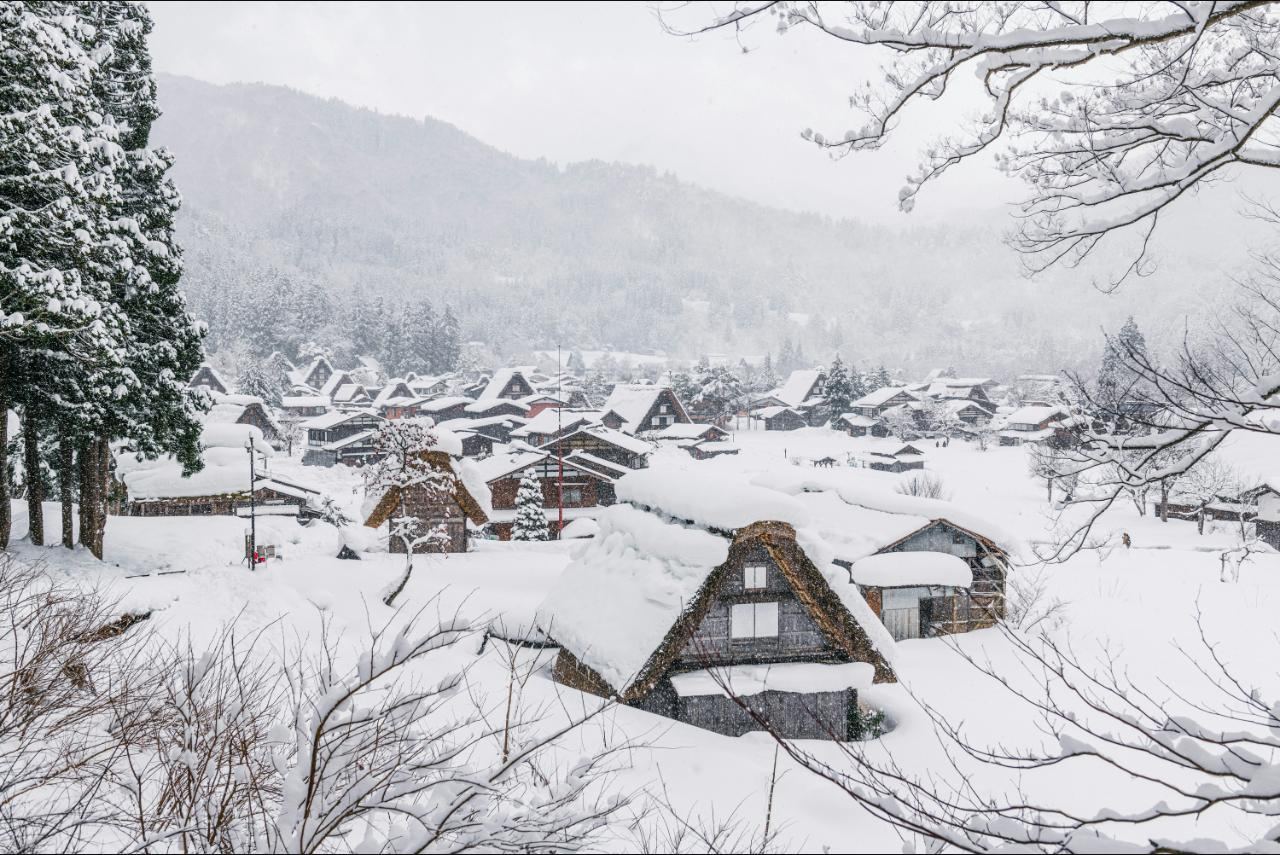
This is the region the coast-versus-latitude point matters most for. Sendai, on Tohoku's Pacific side, is relatively dry and sunny in winter despite its northern location. Niigata and Toyama, on the Sea of Japan side at a similar or even more southern latitude, regularly see meters of snow accumulate over the season. If snow itself — rather than just cold weather — is part of what you're after, look at the map's west coast, not just how far north you're going.
Tokyo, Kansai & the Pacific side: cold but usually dry
Tokyo and Kyoto typically see daytime highs around 7-12°C (45-54°F) with nights close to or below freezing, under mostly clear, dry skies — snow is rare enough that when it does fall, train delays and minor chaos tend to follow, since infrastructure isn't built around it. For sightseeing, this combination of cold-but-clear weather and thinner crowds (outside the New Year holiday itself, covered in a separate guide) makes winter a genuinely good time to visit these cities.
Kyushu & Okinawa: winter that barely bites
Fukuoka and the rest of Kyushu run mild by Japanese winter standards, generally 10-12°C (50-54°F) in the daytime with little snow outside the interior mountains. Okinawa is the real outlier — daytime temperatures of roughly 17-19°C (63-66°F) make it Japan's closest thing to a winter escape, though it's a mild subtropical winter, not a beach-weather one.
What to actually pack and expect
Layering matters more than one heavy coat, since indoor heating varies a lot by building — modern spaces and trains are usually well-heated, but older wooden structures like some temples, shrines, and traditional ryokan can be surprisingly cold, and genkan entryways are unheated by design. If your route includes the Sea of Japan coast or Hokkaido, waterproof, grippy footwear is worth prioritizing over how warm a coat looks. Wherever you're headed, treat published winter temperatures as a starting point — conditions shift year to year, so it's worth checking a closer-in forecast once your dates are set.
Related reading
Want a full itinerary, not just one article?
The Trip Planner builds a day-by-day plan around the regions and interests you pick.
Open Trip Planner