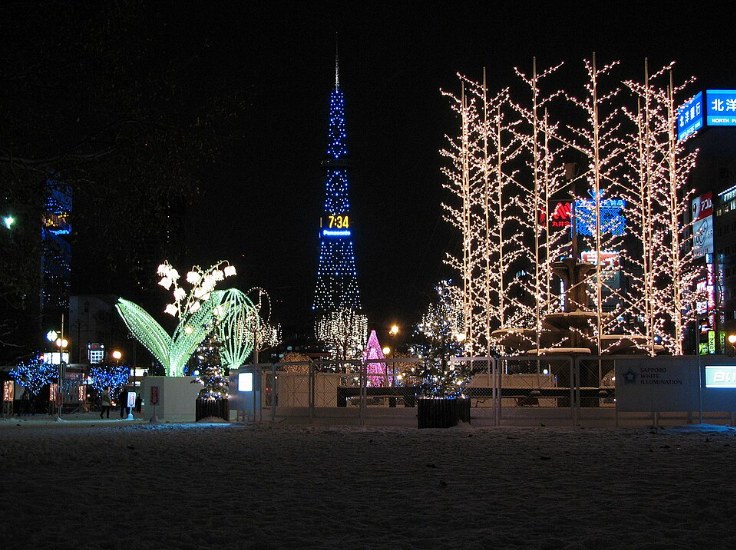
Photo: 蛇使いの工藤 / CC BY-SA 4.0
The Three Great Night Views of Japan
Hakodate, Nagasaki, and Kobe form Japan's classic "Three Great Night Views" trio — here's how to see each one, and how a newer list differs.
Last updated 2026-08-26
What the "Three Great Night Views" Designation Actually Means
Long before anyone was ranking hotels or ramen shops, Japan had already developed a habit of grouping its scenery into threes, and nighttime cityscapes eventually got the same treatment. The phrase most visitors encounter is "Nihon Sankei Yakei" (日本三大夜景), typically translated as the "Three Great Night Views of Japan," and it generally refers to the illuminated panoramas seen from Mt. Hakodate in Hokkaido, Mt. Inasa above Nagasaki, and the hillside overlooks of Kobe (most famously Mt. Rokko and Mt. Maya). This grouping is old and informal rather than a single government-issued award; it grew out of decades of travel writing and popular consensus, often discussed alongside comparisons to a supposed "world three great night views" that historically paired Hong Kong and Naples with one of these Japanese cities.
It's worth being precise here, because this is one of the more commonly muddled bits of Japan travel trivia: there is a separate, newer, and formally organized designation called the "New Three Great Night Views of Japan" (日本新三大夜景), run by a night-view tourism organization that periodically resurveys and re-announces its picks (roughly every few years, based on a public and expert voting process tied to Japan's broader "night view heritage" project). That newer list has, at various points, included Nagasaki alongside cities like Sapporo (viewed from Mt. Moiwa) and Kitakyushu (viewed from Mt. Sarakura), and its lineup can change between selection cycles. Because the newer designation is periodically re-voted and the classic trio is not, travelers should treat the "new" list as a rotating, promotional honor rather than a replacement for the long-established Hakodate–Nagasaki–Kobe grouping this article focuses on.
Hakodate: The Hourglass Silhouette from Mt. Hakodate
Hakodate's night view is built almost entirely around geography. The city sits on a narrow, pinched strip of land connecting a rounded headland to Hokkaido's main body, and from the observation deck atop Mt. Hakodate (standing a few hundred meters above the city), that geography reads as a glowing hourglass or bowtie shape between two dark stretches of water, with the city lights concentrated along the narrow waist. It's a view that photographs distinctly differently from a typical skyline shot, since the drama comes from the shoreline shape itself rather than skyscraper density.
Most visitors ride the Mt. Hakodate Ropeway up from the base station, a trip that typically takes only a few minutes each way, though queues can build substantially in the hour or so around sunset since that transition period, when the sky still holds some color while city lights are switching on, is generally considered the most photogenic window. Because the mountaintop is exposed and can be windy or fogged in even when the city below is clear, it's worth checking current conditions before heading up, and building in some flexibility around dusk rather than arriving right at the last possible ropeway departure.
Nagasaki: A Bowl of Light Around the Harbor from Mt. Inasa
Nagasaki's old town was built into a natural amphitheater of hills wrapped around a harbor, and that layout is exactly what makes its night view distinctive. From the observation platform on Mt. Inasa, reached by ropeway (and sometimes described in local materials with a car or bus route up as an alternative), the city lights fill the bowl-shaped valley on all sides of the dark water, giving an enclosed, almost stadium-like sense of scale that's different from the linear or fan-shaped views typical of other Japanese cities. This bowl effect is frequently cited as the reason Nagasaki's view has also drawn attention in newer, separately organized "world night view" style rankings, distinct from the classic domestic trio described above.
As with the other two cities, the roughly 30 minutes to an hour bracketing sunset tends to be recommended as the ideal visiting window, since it lets visitors watch the harbor transition from daylight into full illumination rather than arriving to lights already fully on. Ropeway operating hours and the last-ascent cutoff can shift seasonally, so it's generally a good idea to confirm current timing locally rather than assuming a fixed schedule, and to have a backup plan in mind in case of cloud cover or rain, which can significantly dull the view from altitude.
Kobe: City Lights Meeting the Bay
Kobe's contribution to the classic trio is often called the "ten-million-dollar night view" (a phrase that started as a nod to a lower dollar figure decades ago and has since been inflated in local branding), and it's distinguished by the way a dense, orderly grid of city lights runs right down to the edge of Osaka Bay, with the port's cranes, ships, and waterline adding a working-harbor texture that pure skyline views usually lack. The classic vantage points are up in the hills behind the city, particularly Mt. Rokko and the closer, easier-to-reach Mt. Maya (whose Kikuseidai observation deck is a commonly recommended spot), both of which look down over central Kobe toward the water.
Travelers who prefer to stay at sea level rather than heading into the hills can also get a different, closer-up version of Kobe's nighttime charm from the waterfront around Meriken Park and the Kobe Port Tower area, though this lower vantage trades the sweeping elevated panorama for an intimate view of the illuminated harbor structures themselves. Getting up to Rokko or Maya typically involves a combination of local transit, a cable car or ropeway, and sometimes a connecting bus, so it's worth mapping the full route in advance and, again, aiming for the period around sunset on a clear evening for the best combination of visibility and atmosphere.
Classic Three vs. "New" Three: Don't Mix Them Up
Because Nagasaki appears prominently in both the older, informal "Nihon Sankei Yakei" trio and the newer, formally re-voted "New Three Great Night Views" project, it's easy to see how the two designations get blended together in casual writing, but they are genuinely separate honors with different histories, different organizing bodies, and different (and sometimes shifting) member cities. Hakodate and Kobe belong specifically to the older, classic grouping and are not reliably part of the newer rotating list, while cities such as Sapporo and Kitakyushu have appeared in the newer designation without being part of the classic three. When reading other travel sources, it's worth checking which list is actually being referenced before assuming any single, fixed "official" set of three cities applies across the board.
Planning a Night View Visit
All three classic locations reward the same basic strategy: aim to arrive at the summit or observation point before sunset so you can watch the transition from daylight to full illumination, since that changeover period is when most photographers and locals consider the view at its best, and build in a buffer for ropeway or cable car queues that tend to peak in exactly that window. Clear, low-humidity nights produce noticeably crisper views than hazy or rainy ones, so if your schedule allows some flexibility, it's worth checking a short-range forecast and shifting your visit to the clearest evening available rather than fixing a specific date far in advance.
Ropeway and cable car schedules, ticket prices, and last-ascent times can all vary by season and are subject to change, so treat any specific hours you see quoted, including on this page, as a general guide rather than a guarantee, and confirm current operating details directly with the relevant ropeway or transit operator shortly before your visit. It's also sensible to dress warmer than you might expect, since mountaintop viewpoints are typically several degrees cooler and windier than the city streets below, especially outside the summer months.
Related reading
Want a full itinerary, not just one article?
The Trip Planner builds a day-by-day plan around the regions and interests you pick.
Open Trip Planner