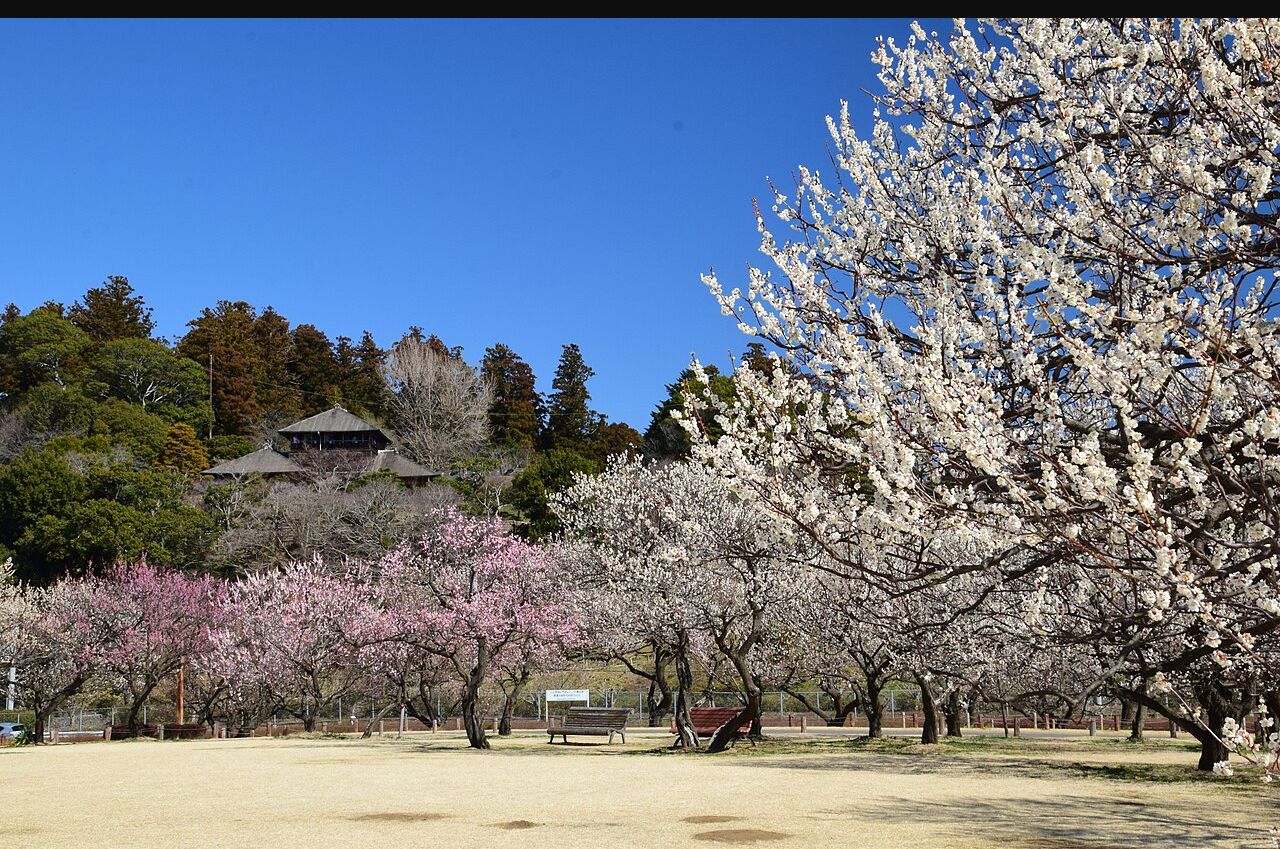
Photo: SQ0 / CC BY 4.0
Plum Blossom Season in Japan: Where to See Ume Early
Plum blossoms (ume) bloom weeks before cherry blossoms and draw a fraction of the crowd. Here's the region-by-region bloom order and where to actually go.
Last updated 2026-08-25
The short version
Plum blossoms (ume) are Japan's first real flowering-tree season of the year, opening weeks to months before cherry blossoms and drawing a fraction of the crowd. Where sakura viewing means picnic mats claimed at dawn and famous spots packed shoulder to shoulder, ume gardens in full bloom are often genuinely peaceful — the flowers are smaller and the display less overwhelming than sakura, but the trade-off is a much calmer visit and, in places like Dazaifu and Kitano Tenmangu, a deeper cultural story attached to the trees themselves.
Bloom timing moves south to north and coastal to inland, the same general pattern as cherry blossoms but starting much earlier and stretched over a longer window — which makes it easier to plan around than sakura's famously narrow, weather-dependent peak.
Roughly when and where it starts
Japan's earliest plum blossoms are usually found at Atami Baien on the Izu Peninsula in Shizuoka, a warm coastal microclimate where trees can start opening as early as late December or January — often advertised as the first ume of the year anywhere in Japan. From there, bloom progresses through Kyushu and the rest of western Japan in January and February, reaches the Kanto and Kansai regions (Tokyo, Kyoto, Ibaraki) mainly in February, and doesn't wrap up in cooler Tohoku areas until sometime in March. Exact dates shift meaningfully year to year with winter temperatures, so treat any specific week as a rough estimate and check a current bloom forecast before finalizing plans, the same way you would for sakura.
Where to actually go
Atami Baien (Shizuoka) claims the earliest blooms in the country most years and holds a long-running plum festival alongside it, making it a realistic option even for a January trip when almost nothing else is in flower. Dazaifu Tenmangu (Fukuoka, see our Fukuoka guide) is dedicated to Sugawara no Michizane, the deified scholar strongly associated with plum trees in Japanese legend, and the shrine grounds are planted with thousands of them — visiting doubles as a stop at one of Kyushu's most significant shrines, not just a flower-viewing trip. Kitano Tenmangu in Kyoto, also dedicated to Michizane, has a large plum grove and is one of the more atmospheric ume spots in the Kansai region. Kairakuen in Mito, Ibaraki (see our Ibaraki guide) is counted among Japan's three great gardens and plants several thousand plum trees across its grounds. In Tokyo, Yushima Tenjin, Hanegi Park, Koishikawa Korakuen, and Kyu Shiba Rikyu are all accessible city options without a day trip. And Odawara's ume festival in Kanagawa (near Hakone, see our Kanagawa guide) is known for pairing its plum orchards with a Mount Fuji backdrop on clear days.
Why plan a trip around it specifically
Beyond the smaller crowds, ume carries more cultural weight in Japan than its lower profile abroad suggests — it was the flower Japanese poetry associated with spring before sakura took over that role, and its connection to Michizane (posthumously worshipped as Tenjin, the god of scholarship) means plum-viewing at shrines like Dazaifu and Kitano Tenmangu overlaps with genuine religious and academic significance, not just scenery. If you also want to understand ume as food rather than flower, our Wakayama guide covers the umeboshi and umeshu side of plum culture, which is a different, separate part of the tradition from the blossoms themselves.
How to actually plan it
Because ume bloom windows are longer and less synchronized than sakura's, there's more flexibility in when you go, but also less certainty about hitting exact peak bloom at any single garden — search for the specific site's current bloom status shortly before your trip rather than booking around a fixed calendar date. If your trip lands in January or early February, Atami and Kyushu are the more reliable bets; by mid-to-late February, Kanto and Kansai spots like Kairakuen, Tokyo's gardens, and Kitano Tenmangu are more likely to be in bloom.
Related reading
Want a full itinerary, not just one article?
The Trip Planner builds a day-by-day plan around the regions and interests you pick.
Open Trip Planner