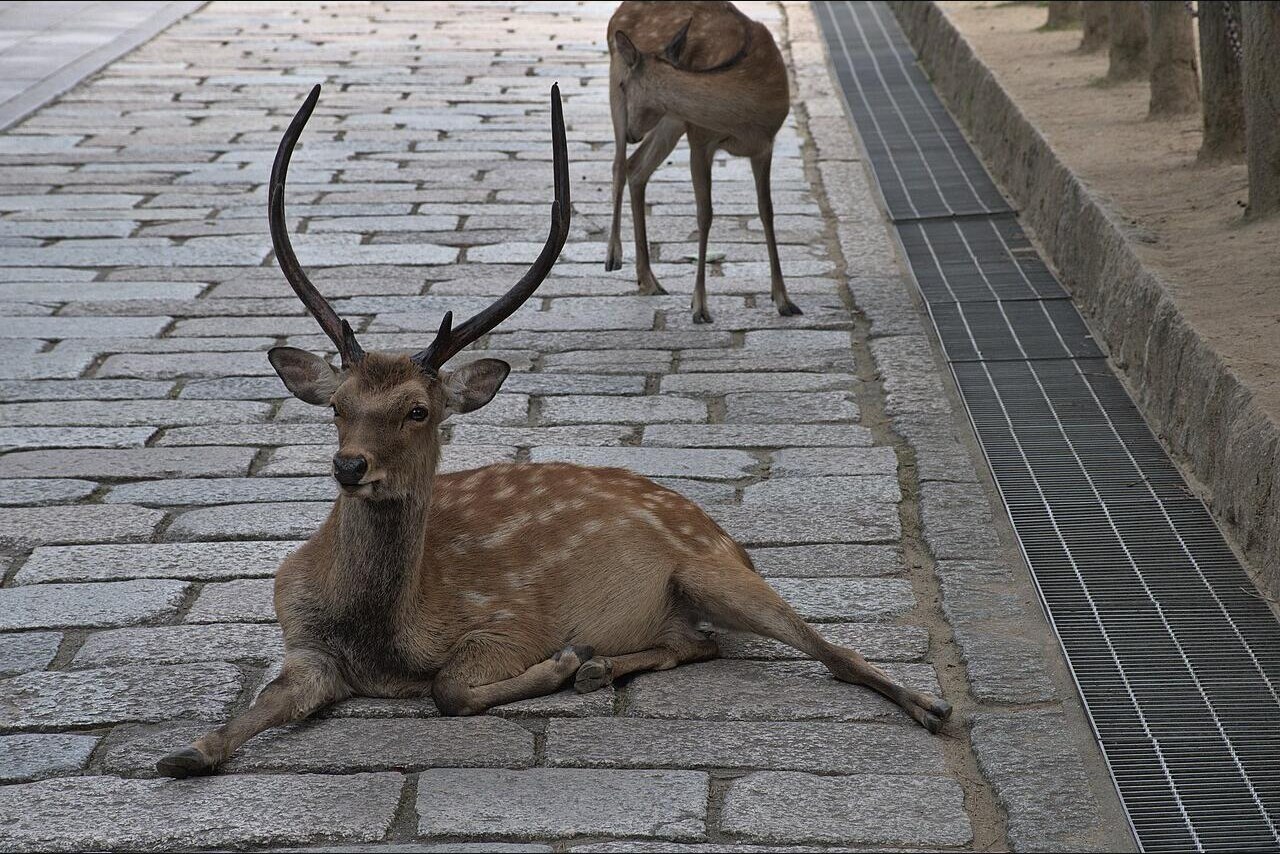
Beyond the Deer: Kasuga Taisha and Nara's Temples
Nara Park's deer get all the attention, but the lantern-lined path to Kasuga Taisha and a five-story pagoda nearby are worth the extra time.
Last updated 2026-08-22
Kasuga Taisha's lanterns
Kasuga Taisha's approach path is lined with roughly 2,000 stone lanterns donated over the centuries, moss-covered and half-hidden under the trees — genuinely different in mood from the open plazas at Todai-ji. Local legend actually ties Nara's deer directly to this shrine: its founding deity is said to have arrived riding a white deer, which is why the animals have been protected here for so long. Bronze lanterns hang under the shrine's eaves and are lit a few times a year for special festivals — check current dates if that's part of your interest.
Kofuku-ji and Isuien Garden
Kofuku-ji's five-story pagoda, rebuilt after fires over the centuries, is the second-tallest wooden pagoda in Japan after Kyoto's To-ji, and it's visible from much of central Nara. The temple's National Treasure Museum holds notable Buddhist statuary if you want to go beyond the exterior. Isuien, a small Meiji-era strolling garden nearby, uses 'borrowed scenery' — framing Todai-ji's Nandaimon gate and the hills behind it as part of the garden's own view.
Naramachi
South of the main temple area, Naramachi is Nara's old merchant quarter, a grid of narrow lanes with preserved wooden machiya townhouses now holding cafes, small museums, and craft shops. It's quieter than the deer park and a good way to slow down after a morning of temple-hopping.
Related reading
Want a full itinerary, not just one article?
The Trip Planner builds a day-by-day plan around the regions and interests you pick.
Open Trip Planner