Photo: Chensiyuan / CC BY-SA 4.0
Matsushima Bay Oysters and Miyagi's Coastal Seafood Culture
Miyagi's Matsushima Bay has farmed oysters for centuries, and the coast remains a top seafood-producing area after a hard recovery since 2011.
Last updated 2026-08-22
Centuries of Oyster Farming in a Sheltered Bay
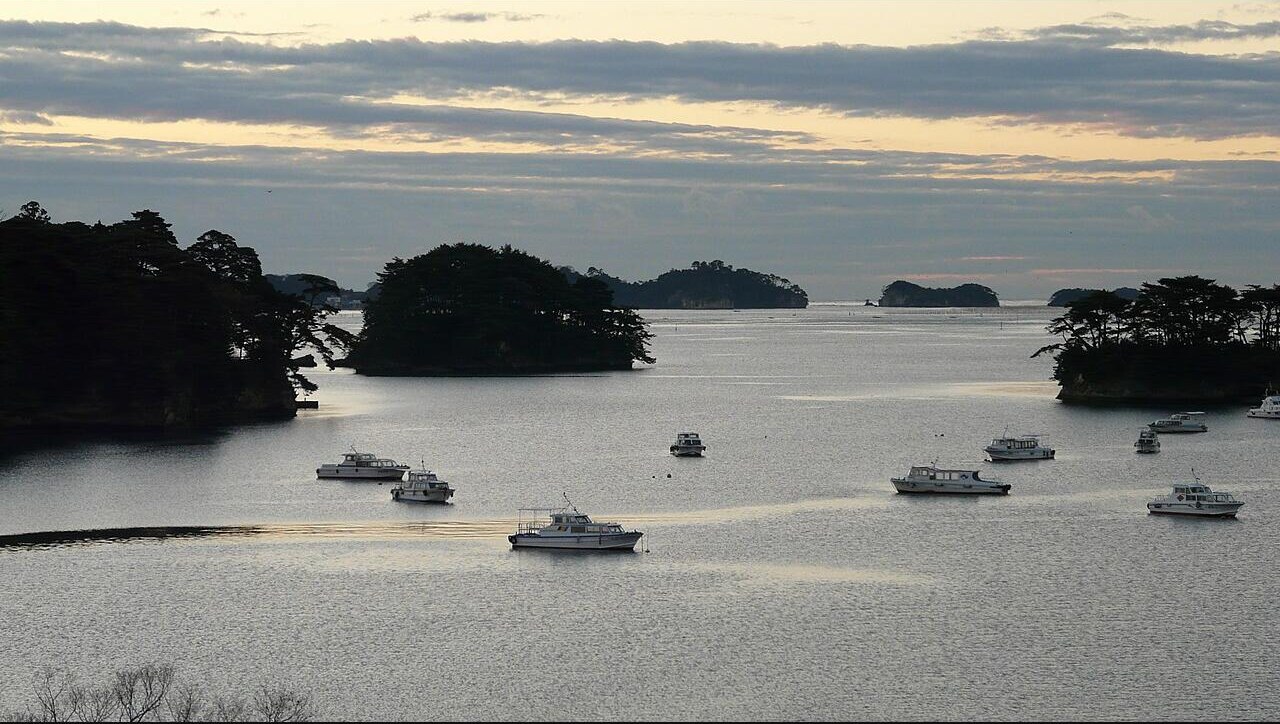
Matsushima Bay's roughly 260 small islands break up wave action enough to create calm, sheltered waters that have supported oyster farming for centuries, making Miyagi one of Japan's leading oyster-producing prefectures. Local oysters are generally smaller and more mineral-forward than the famously large, creamy oysters from Hiroshima, and they're traditionally eaten raw, grilled, or with a light vinegar-based dressing rather than fried. Peak season runs roughly from late autumn through winter into early spring, though it shifts somewhat year to year, so check current timing before planning around it.
Beyond Oysters: A Broader Coastal Larder
Miyagi's coast, particularly around Kesennuma further north, is also a major landing port for bonito, swordfish, and shark, and Kesennuma has historically ranked among Japan's top ports for shark landings, much of it processed into shark fin and other products. The 2011 tsunami hit this coastline hard, and oyster beds, processing facilities, and fishing fleets took years to rebuild in some communities, with recovery still visibly uneven between towns. Seafood sold today is monitored under Japan's standard food safety testing framework, but it's fair to ask locally if you want specifics.
Related reading
Want a full itinerary, not just one article?
The Trip Planner builds a day-by-day plan around the regions and interests you pick.
Open Trip Planner