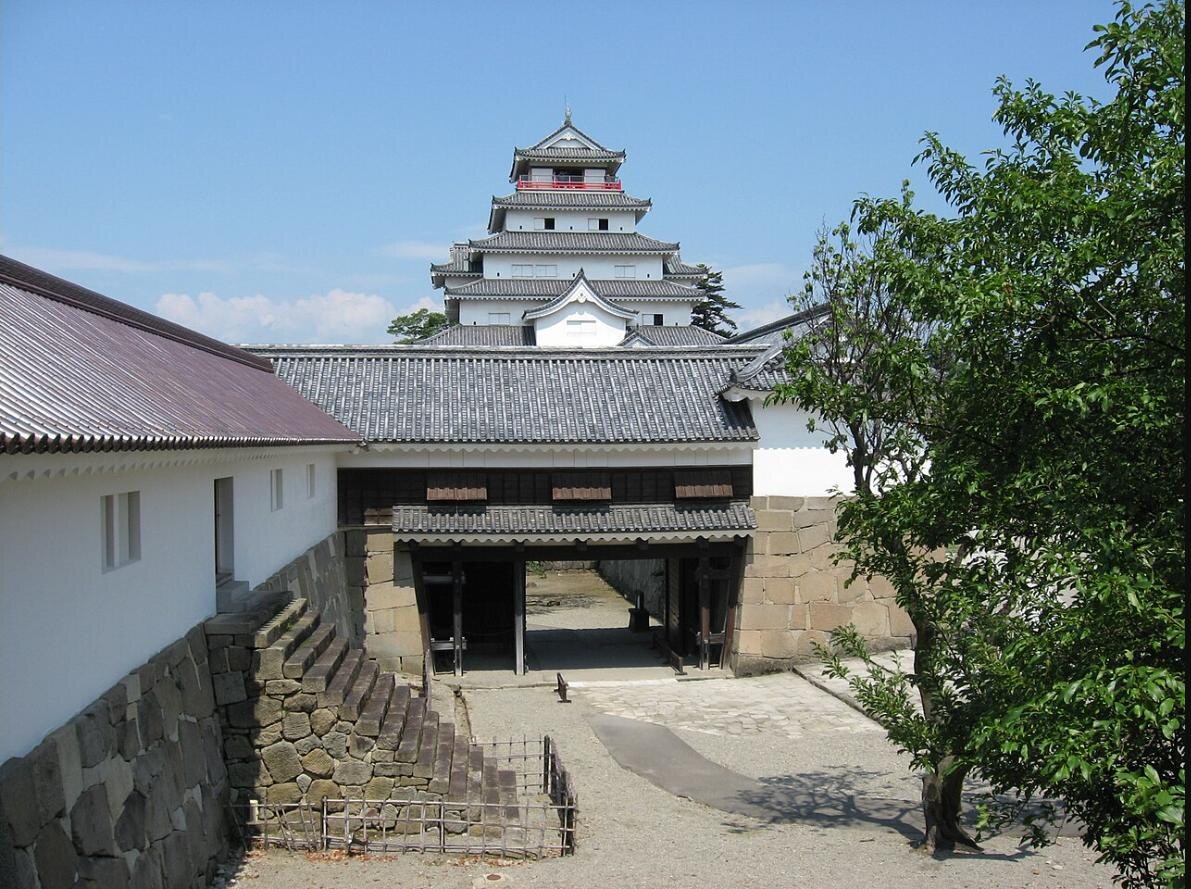
Photo: Σ64 / CC BY-SA 3.0
Fukushima: Ouchi-juku's Thatched Streets and Aizu Castle
Most of Fukushima prefecture is far from the 2011 nuclear accident site and open to visitors, with a preserved post town and a samurai-era castle.
Last updated 2026-08-22
A note on the 2011 disaster
Fukushima prefecture is large, and the areas most affected by the 2011 nuclear accident are a specific coastal stretch, not the whole prefecture. Popular inland destinations like Aizu and the Bandai region are geographically distant from that site and have operated as normal tourist areas for years. If you're curious about current conditions in any specific coastal area, it's worth checking recent official guidance rather than relying on general impressions.
Ouchi-juku's thatched roofs
Ouchi-juku is a former post town on an old Edo-period travel route, preserved with thatched-roof buildings now serving as soba restaurants and craft shops. It's particularly striking under snow in winter, and negi soba — eating soba using a whole green onion instead of chopsticks — is a local novelty worth trying once. It's rural and best reached with a car or a planned bus connection.
Aizu-Wakamatsu and Tsuruga Castle
Aizu-Wakamatsu's Tsuruga Castle (a rebuilt concrete reconstruction, not the original wooden structure) anchors a city with a strong samurai history, including the story of the Byakkotai — a group of young samurai who died here during the Boshin War. Nearby Lake Inawashiro and the Bandai-Azuma skyline area offer easy nature stops if you have a car.
Related reading
Want a full itinerary, not just one article?
The Trip Planner builds a day-by-day plan around the regions and interests you pick.
Open Trip Planner